


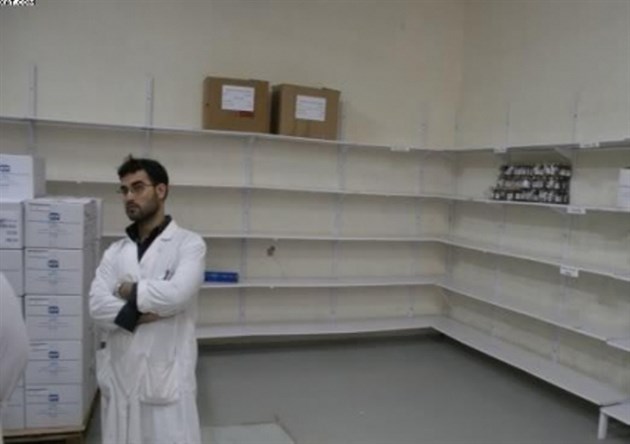
Palestinian Ministry of Health confirmed that the crisis of health sector in Gaza is continuing and seriously increasing for two months, due to the acute shortage of medicines and medical consumables.
General Director of International Cooperation at Ministry of Health, Dr. Muhammad Al-Kashif said that the crisis has spread to important health services in the health sector, particularly the quality services.
Al-Kashif warned of «ominous real disaster», if we did not work seriously to end the crisis, pointing out that the crisis has entered the most dangerous stage in the beginning of this year despite the continuous warnings to neutralize the health file for any political conflicts.
He also held the Ministry of Health in Ramallah a large part of responsibility for the crisis after excluding Gaza from its legal share of drugs and medical consumables, which is stipulated in the agreements with the World Bank and the European Union, amounting to 40 % for Gaza, 60 % for the West Bank.
Regarding the impact of the crisis on health services, Al-Kashif explained that his ministry declared a state of emergency, whereas, it reduced many of the health services such as dental clinics in primary care centers and children's and women's health and chronic diseases in addition to re-schedule the surgeries.
Moreover, Al-Kashif appreciated all efforts that made by various parties, despite the limited assistance, which is only 10% of the total needs of medicines and medical consumables.
In the same vein, general director of Administrative and Financial Affairs in the Ministry of Health, Moussa Al-Samak described the shortage of fuel and spare parts of generators as the other face of the crisis of medicines.
"Gaza hospitals and health centers are experiencing a severe shortage in the amount of diesel supplied to meet the needs of power generators, which operate from 8 to 12 hours a day is the period of power outages." Al-Samak said.
Al-Samak explained that the power cuts for long hours daily damage several vital equipments and departments in hospitals and primary care centers, as well as these generators is not ready to work for such long periods of time, and in it is in need of ongoing maintenance.


